Why Choosing the Right Plastic Granulating Machine Matters for Your Recycling Business
If you’re in the plastic recycling industry, you know that the quality of your pellets determines your profit. Whether you’re processing HDPE, LDPE, or PP scrap, a plastic granulating machine is the heart of your operation. After years of visiting factories and comparing dozens of models, I’ve narrowed down the seven most important factors you must evaluate before making a purchase. This guide is based on a real specification sheet for a well-engineered unit (the SJ series), but the principles apply to any plastic granulating machine you consider.
1. Material Compatibility – HDPE, LDPE, and PP
Not all granulators can handle different types of polyolefins. A good plastic granulating machine must be designed for both rigid and flexible materials. The SJ series, for example, processes HDPE, LDPE, and PP block scrap. This versatility means you can accept a wider range of input material, reducing your sorting costs. Ask your supplier: “Can the machine run both film and rigid scrap?” If the screw design isn’t optimized for mixed materials, you’ll end up with inconsistent melt quality.
2. Automatic Screen Changer – Cut Downtime
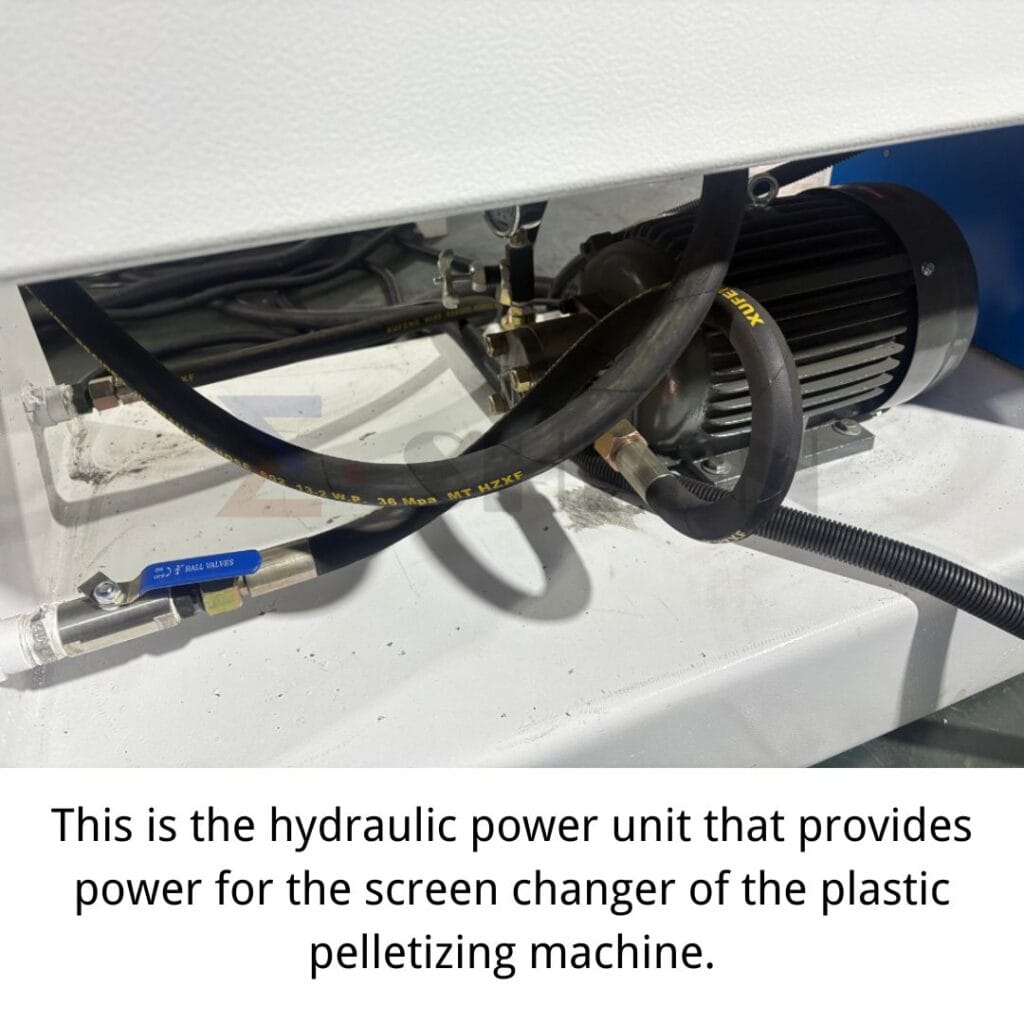
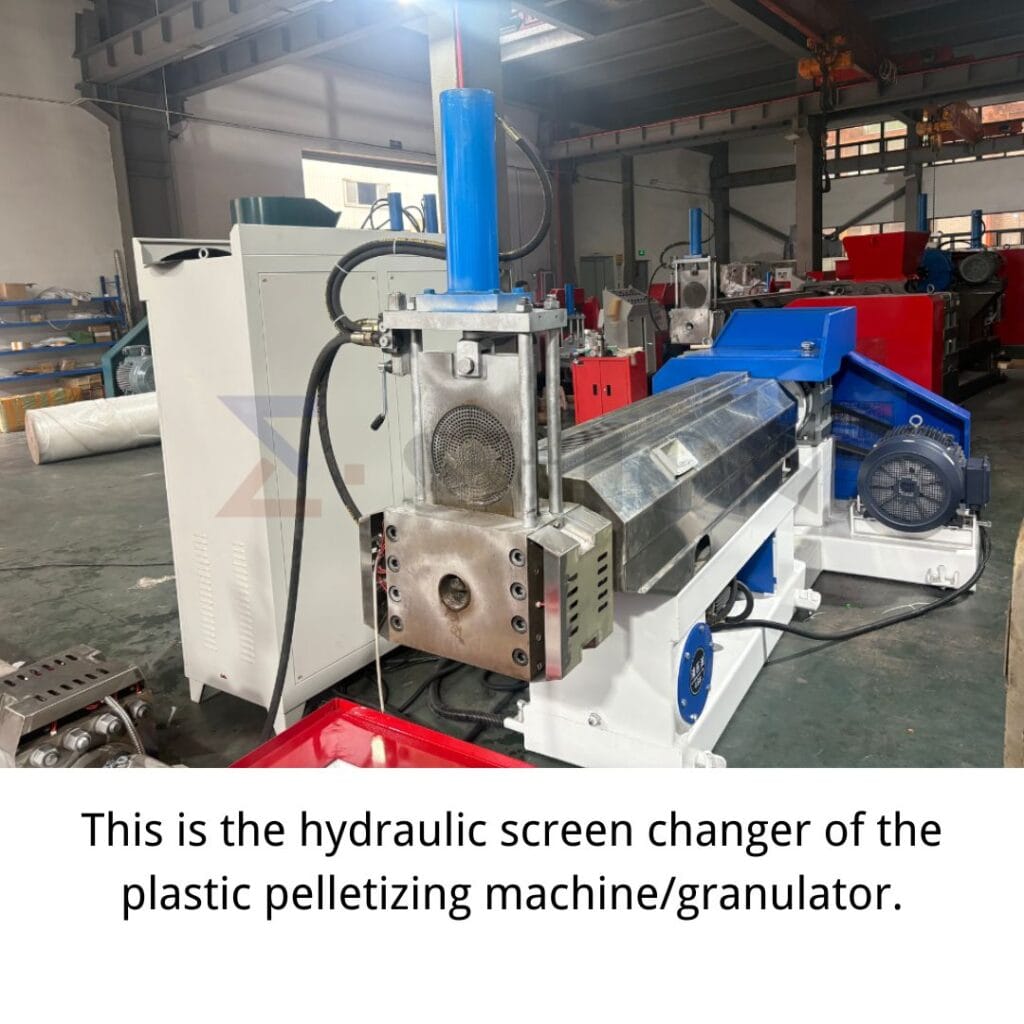
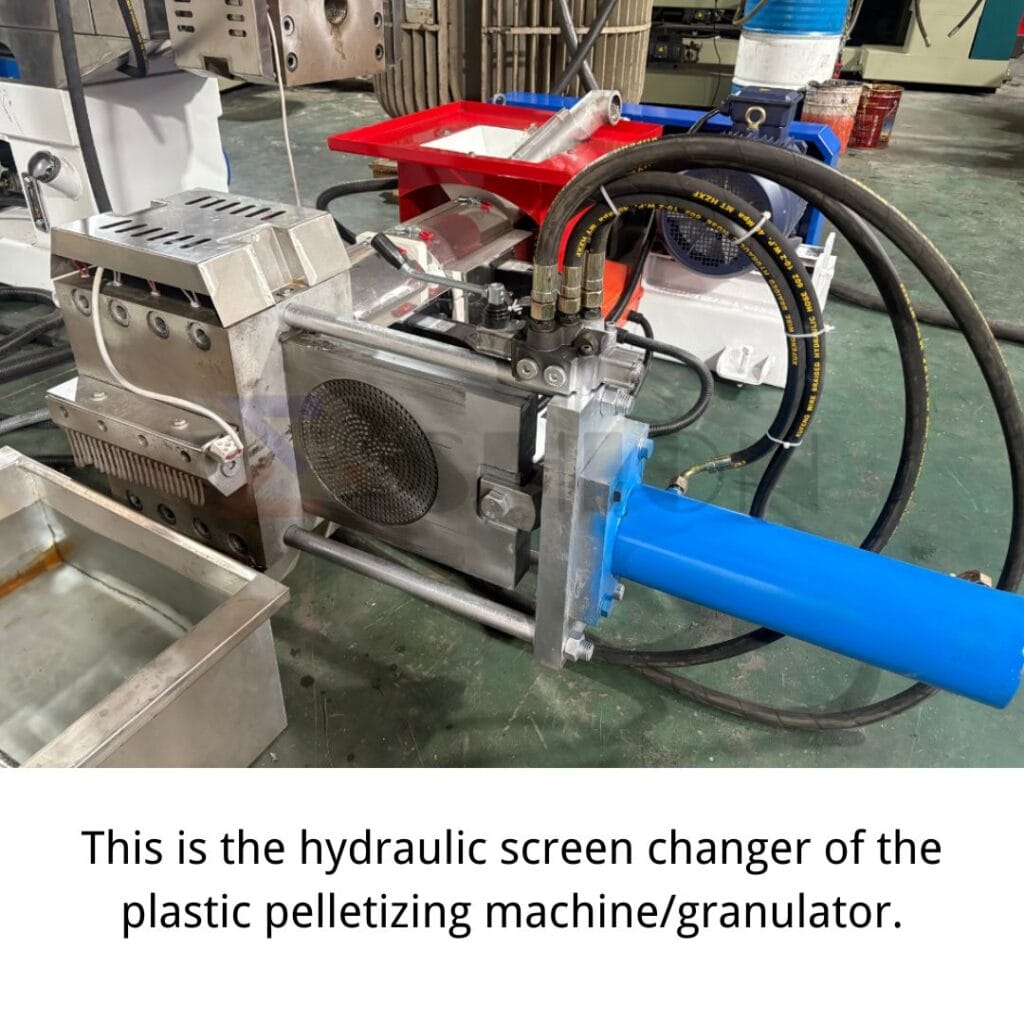
Manual screen changes are a productivity killer. The best plastic granulating machine includes a quick motor-operated filter screen replacement unit. This allows you to change the screen without stopping the extruder, keeping your line running. The SJ series features this as standard. Without it, you could lose 20–30 minutes every hour. When comparing machines, always check if the screen changer is motorized and can handle continuous operation.
External Resource:
Learn more about screen changer technology from Nordson – Filtration Solutions (DoFollow link).
3. Temperature Control – Consistent Pellet Quality
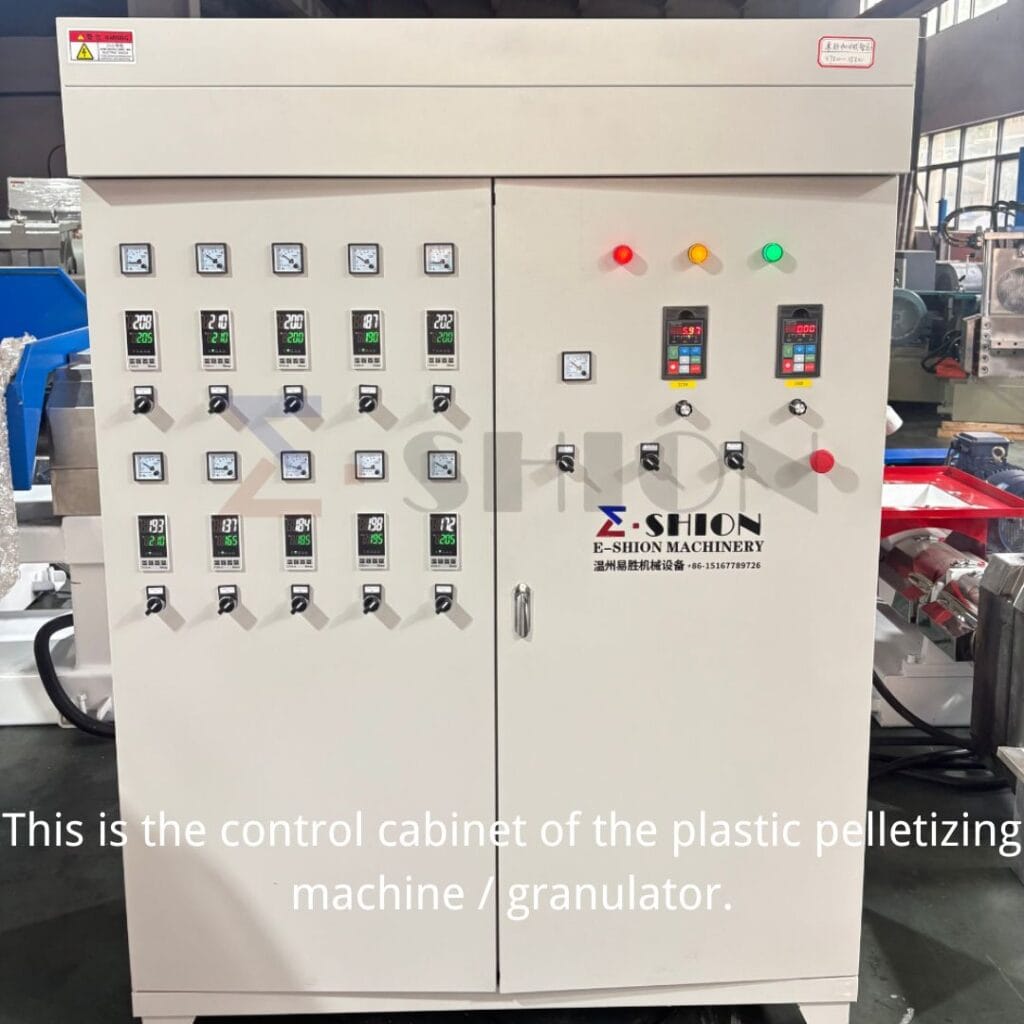
Melt temperature fluctuations cause poor pellet shape and degradation. A modern plastic granulating machine uses automatic temperature control with PID or better. The SJ series includes multi-zone heating control, ensuring each section of the barrel stays within ±2°C. This is critical when processing PP, which has a narrow processing window. Ask the supplier how many temperature zones are controlled independently.
4. Synchronized Pelletizing – No Jams
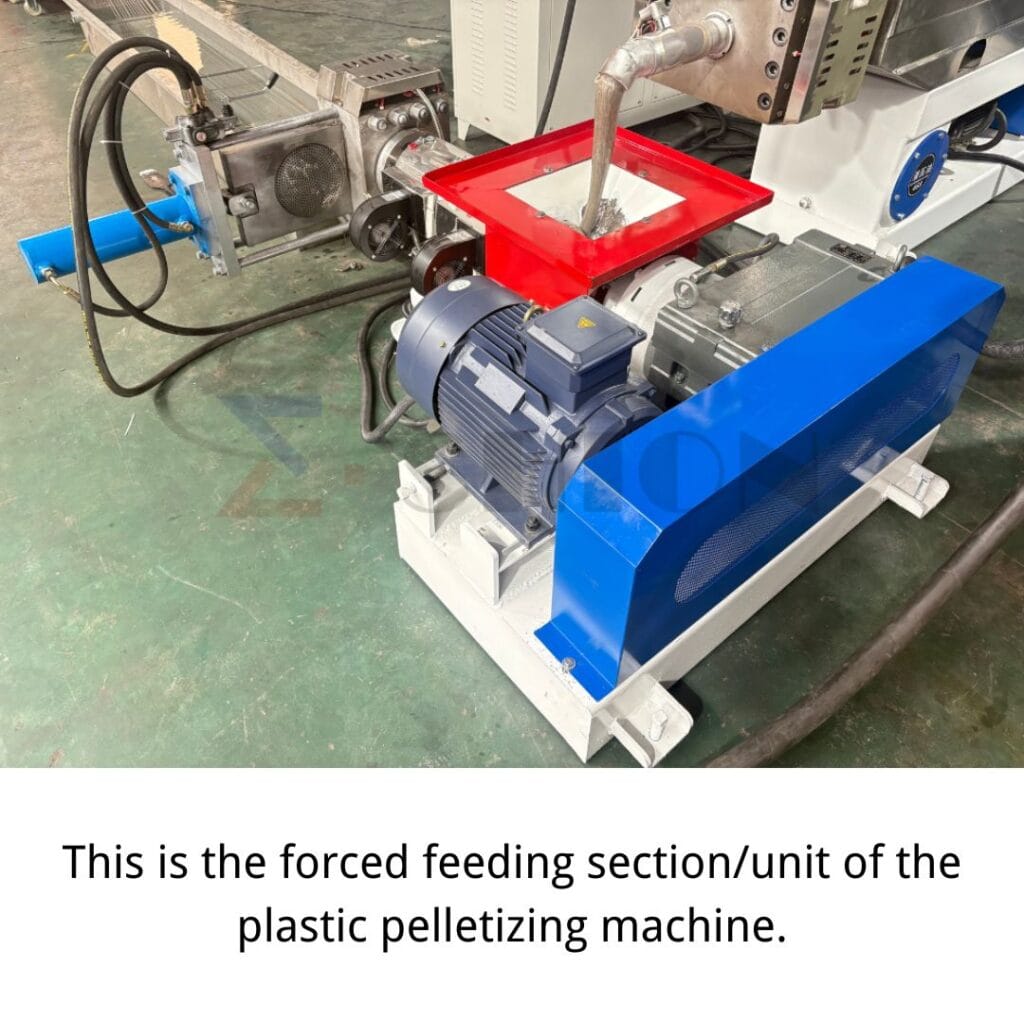
The pelletizing unit must match the extruder output speed. Cheap machines use a fixed-speed cutter, leading to overfeeding or undercutting. The SJ series uses an adjustable speed motor for the pelletizer, synchronized with the extrusion speed. This ensures clean, uniform pellets and prevents knife wear. A plastic granulating machine with proper synchronization dramatically reduces fines and dust.
5. Throughput Capacity – Match Your Target
Throughput is often the first thing buyers look at. The SJ series offers models from 150–500 kg/hr, covering small to medium recycling lines. But don’t just take the number – ask under what conditions. A plastic granulating machine rated for 300 kg/hr with one material may only do 200 kg/hr with another. Request a test run with your own scrap.
6. Machine Build and Durability
A heavy machine is a stable machine. The SJ series weighs 5.5 to 8.5 tons, indicating a solid steel frame that reduces vibration at high speeds. Lightweight granulators (under 4 tons) often flex, causing misalignment in the screw and barrel. Check the screw L/D ratio as well – the SJ series uses 28:1 to 32:1, which is optimal for mixing and degassing. A plastic granulating machine with a good L/D ratio produces better pellets with fewer volatiles.
7. Energy Efficiency – Lower Operating Cost
Electricity is your largest variable cost. The SJ series main motor ranges from 30 to 90 kW depending on the model. Compare this with older units that consume 20–30% more power for the same output. Also, look for using frequency inverters on the main motor. The SJ series includes this for smooth start-up and energy savings. A plastic granulating machine with VFD control can reduce your kWh per ton significantly.
Internal Link:
For more tips on reducing energy costs in recycling, read our guide: How to Cut Power Consumption in a Plastic Recycling Line →
Technical Specifications (Based on SJ Series)
Below are the detailed parameters of a typical plastic granulating machine series. Use them as a benchmark when evaluating suppliers.
| Model | SJ100 100 | SJ120 120 | SJ140 140 | SJ150 150 |
|---|---|---|---|---|
| Screw Diameter | 100/100mm | 120/120mm | 140/140mm | 150/150mm |
| Screw L/D Ratio | 28:1–32:1 | 28:1–32:1 | 28:1–32:1 | 28:1–32:1 |
| Screw Speed | 10–100 rpm | 10–100 rpm | 10–100 rpm | 10–100 rpm |
| Main Motor Power | 30 kW | 55 kW | 75 kW | 90 kW |
| Output | 150–200 kg/hr | 200–250 kg/hr | 300–350 kg/hr | 450–500 kg/hr |
| Machine Weight | 5.5 T | 6.5 T | 7.5 T | 8.5 T |
| Cover Dimension | 6000×10000×1800mm | 6500×10000×1800mm | 7000×10000×1800mm | 7500×10000×1800mm |
All models feature automatic temperature control, motorized screen changer, and synchronized pelletizer. When you request a quote, confirm that the plastic granulating machine meets these specs for your target material.
Key Peripheral Equipment for a Complete Pelletizing Line
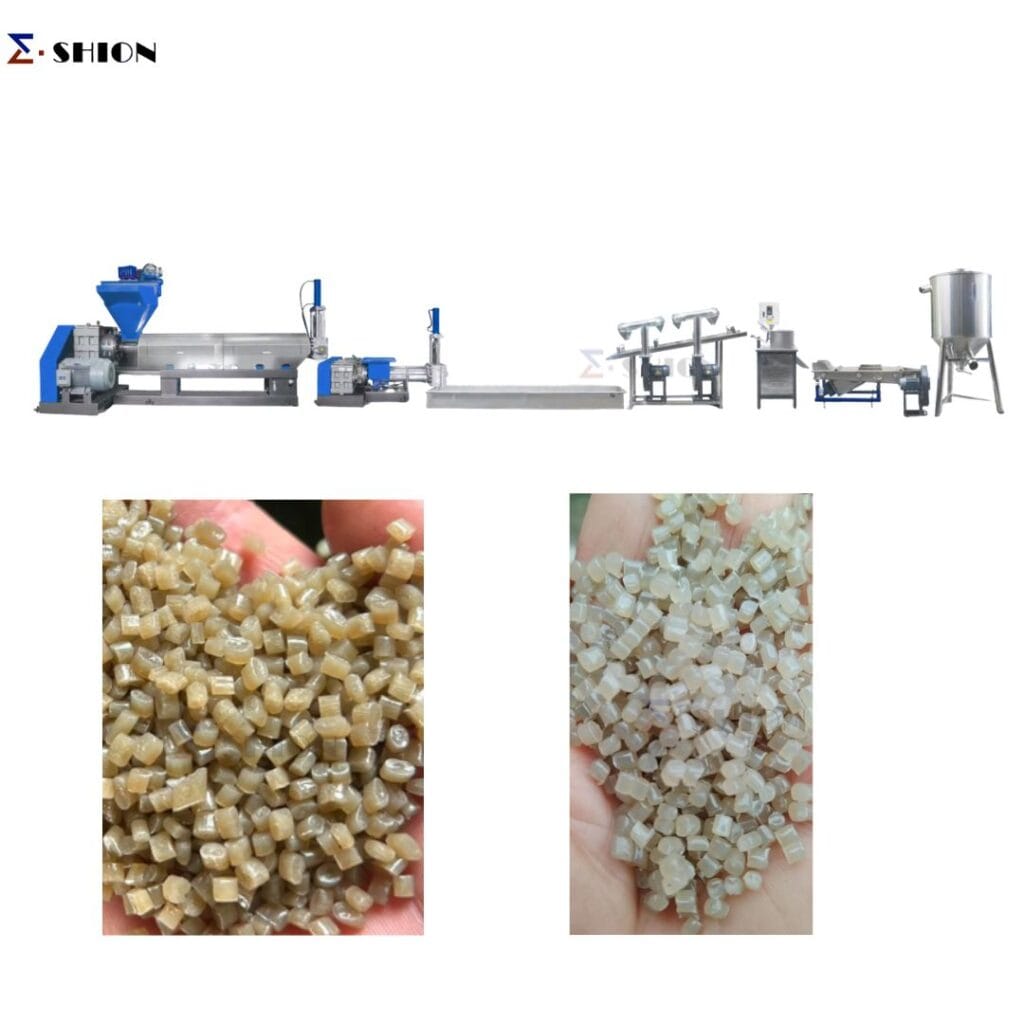
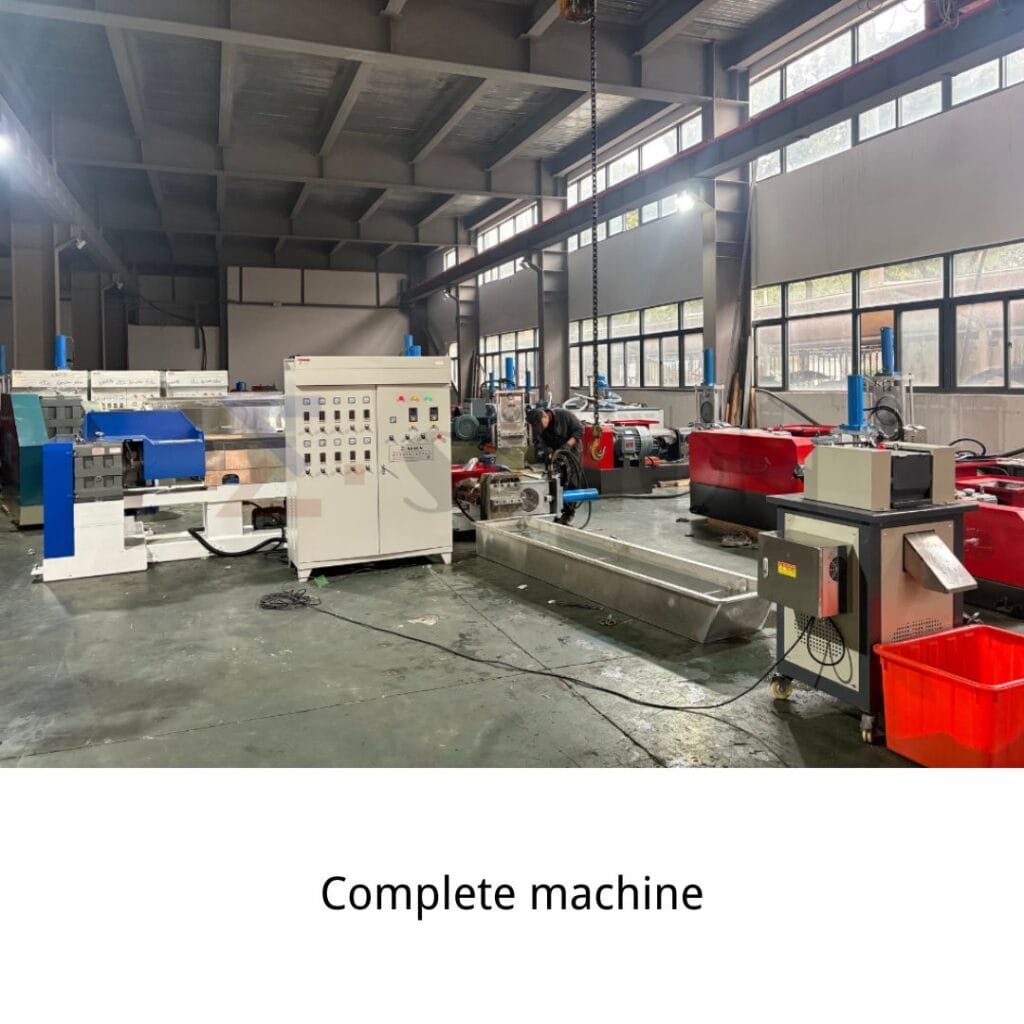
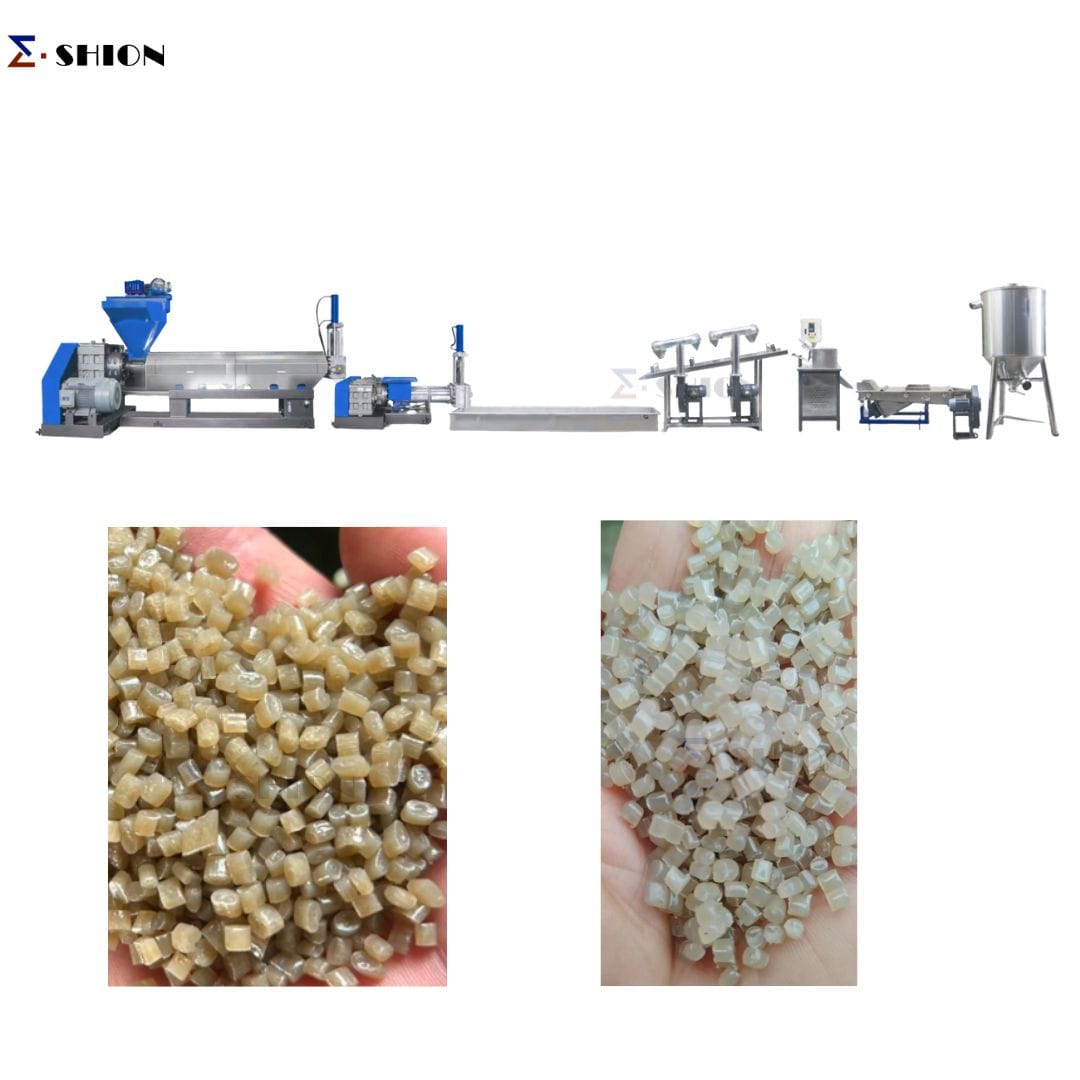
A high-efficiency granulation line is more than just the main extruder. The peripheral equipment directly affects your final pellet quality and production continuity. Here are the standard peripherals included with the SJ series:
- Cutting Type – Die Face Cutting (Water Ring)
Bu SJ series uses a water ring die face cutting system. It cuts the melt directly at the die face as it exits, producing uniform pellets with minimal dust. Compared to strand cutting, it handles higher melt flow materials better and requires less floor space. - Dewatering Device – Vertical Centrifuge (7.5 kW)
After cutting, the pellets pass through a vertical centrifuge dewaterer. The 7.5 kW motor spins off surface moisture, significantly reducing the drying load. This is essential for producing low-moisture pellets ready for bagging or further processing. - Vibrating Screen – Two-Layer (8mm/2mm apertures)
A two-layer vibrating screen separates oversized pellets and fines. The top deck with 8mm mesh catches large particles, while the 2mm bottom deck removes dust. This ensures your final product meets strict size specifications. - Storage Hopper – 500 kg Capacity
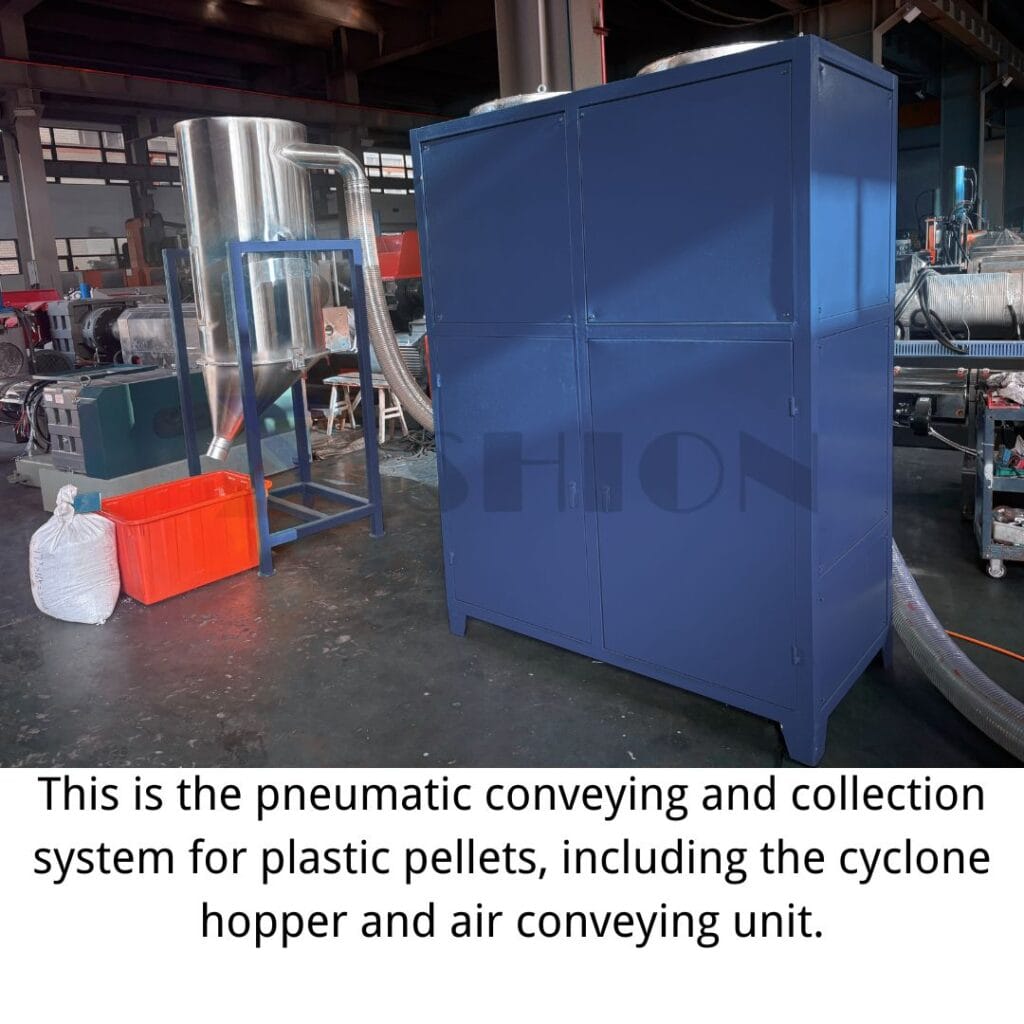
A 500 kg storage hopper collects the finished pellets, allowing continuous operation without frequent manual unloading. It also acts as a buffer between the granulator and downstream packaging or blending equipment.
These peripherals are not just add-ons – they are integral to achieving high efficiency. When comparing a plastic granulating machine, always ask if the package includes these key components or if they are optional.
Conclusion
Investing in a plastic granulating machine is a major capital decision. Focus on material compatibility, automatic screen changing, temperature control, synchronized pelletizing, throughput, build quality, and energy efficiency. The SJ series serves as an excellent benchmark for a well-designed machine, but the same evaluation criteria apply to any model you consider.
Before signing, visit the supplier’s factory, run trials with your own material, and verify the spare parts availability. A good plastic granulating machine pays for itself within 12–18 months through higher output and lower maintenance.